

The UAE is one of the fastest places in the world to go from idea to registered company, but it is also a jurisdiction where early choices (license type, jurisdiction, shareholders, substance, banking readiness) can either simplify your launch or slow you down for months.
This guide is a practical “start here” overview of how to setup a company in the UAE, with the decisions you must make first, the typical steps, and the compliance items many founders only discover after incorporation.
Before you apply: get clarity on 5 inputs
Most delays happen because founders start with “I want a UAE company” instead of a clearly defined setup brief. Before you submit any application, confirm:
- Your activity (what you sell, and whether it is commercial, professional, industrial, crypto, regulated financial services, media, education, healthcare, etc.).
- Where you will do business (inside the UAE market, mostly outside the UAE, or both).
- Who the shareholders and UBOs are (ultimate beneficial owners, and whether any shareholders are corporate entities).
- Whether you need UAE residency visas (for founders, staff, or dependents).
- Banking expectations (expected inflows and outflows, source of funds, customer geographies, and whether you can evidence contracts).
If any of these are uncertain, it is worth pausing and aligning them first, because your jurisdiction and license should follow your real operating model.
Choose the right jurisdiction: Mainland vs Free Zone vs Offshore
In practice, “UAE company” usually means one of three routes. Each has a different operating scope, cost structure, and compliance profile.
| Option | Best for | Can you trade in the UAE market? | Visas possible? | Notes to know early |
|---|---|---|---|---|
| Mainland (onshore, via an Emirate’s economic department) | Serving UAE clients, local contracts, retail, many B2B services | Yes | Yes | Often preferred for broad market access; requirements vary by Emirate and activity |
| Free Zone | International trade, holding/operating regionally, startups wanting packaged setup | Usually outside the UAE market directly (often via distributor/branch arrangements) | Yes | Each free zone has its own rules, office options, and approved activities |
| Offshore | Holding structures, asset ownership, certain international business uses | No (not for operating locally) | No | Not suitable if you need visas or local operations |
For official context on doing business, you can cross-check guidance on the UAE Government portal and your target Emirate or free zone authority.
A quick rule of thumb
If you expect to invoice UAE-based customers frequently, sign local leases, hire locally, or bid for UAE tenders, mainland is often the most straightforward. If your customers are mostly outside the UAE and you want a bundled incorporation package with visa options, a free zone may fit. If you only need a non-operating holding entity, offshore might be relevant.
Select a legal form and ownership structure
Common legal forms include LLC-type entities (for operating businesses) and branch structures (for expanding an existing foreign company). The best fit depends on your activity, risk profile, and whether you need multiple shareholders.
Ownership rules have evolved significantly in recent years, and many activities now allow 100 percent foreign ownership on the mainland, subject to the activity and licensing authority. Because eligibility depends on what you actually do, treat “100 percent ownership” as something to confirm during planning, not an assumption.
If you are structuring for investors, multi-entity groups, or family asset protection, consider the downstream consequences (bank account openings, audited accounts, tax registrations, and substance expectations) before you lock in the structure.
Understand licensing and approvals (activity first, paperwork second)
In the UAE, your licensed activity drives much of the process. Two companies with the same shareholders can have very different approval paths if one is “management consultancy” and the other is “trading,” “e-commerce,” or a regulated activity.
Some activities require external approvals from sector regulators or ministries, depending on the Emirate and jurisdiction. If your business touches financial services, crypto, education, healthcare, insurance, or other regulated sectors, confirm the regulator requirements early.
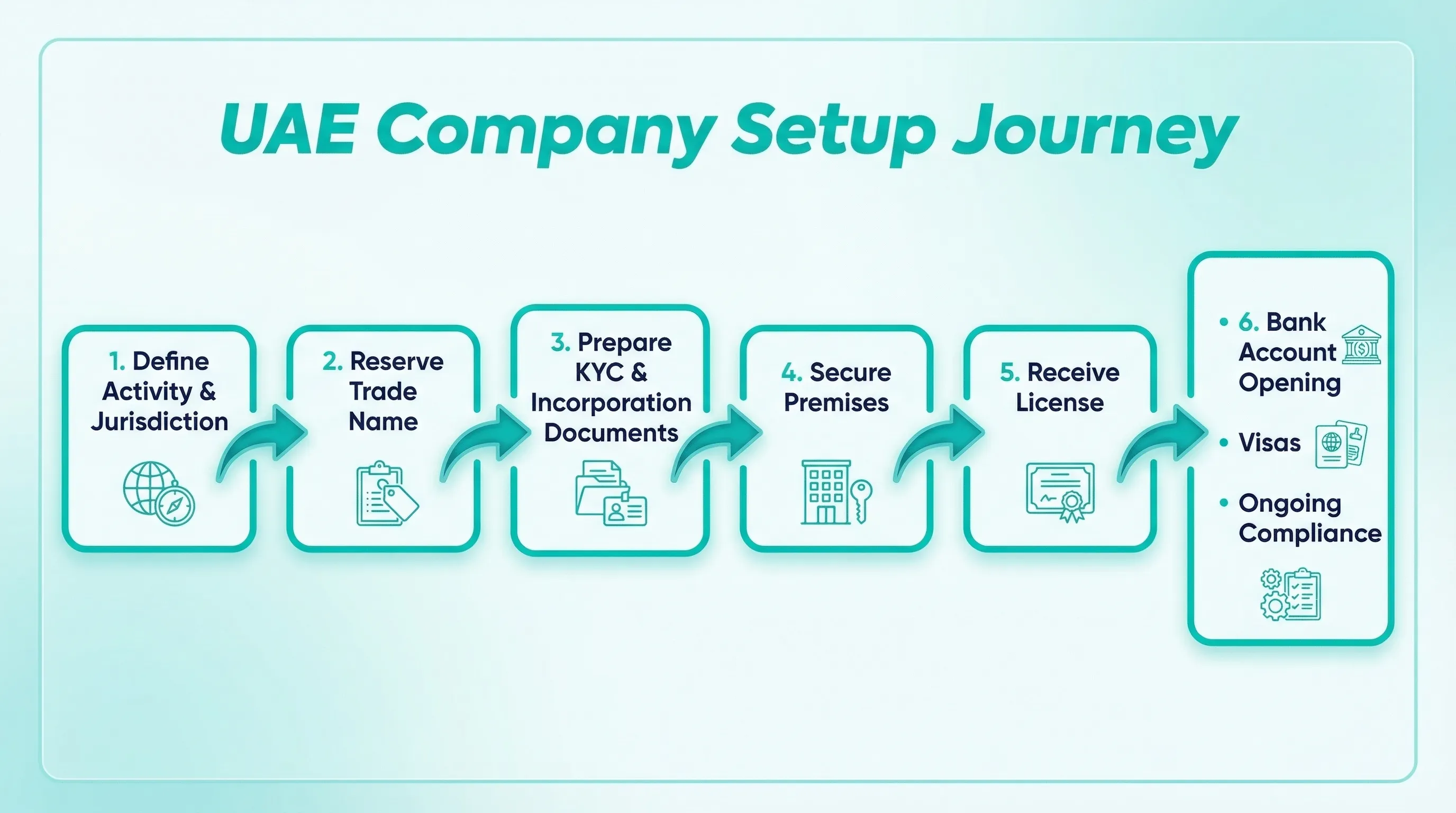
Step-by-step: how to setup a company in the UAE
Exact steps vary by jurisdiction, but most setups follow the same sequence.
Trade name reservation and initial approval
You typically start by reserving a trade name and obtaining initial approval. Common pitfalls include names that imply regulated activities, restricted terms, or brand conflicts.
Incorporation documents and compliance file (KYC)
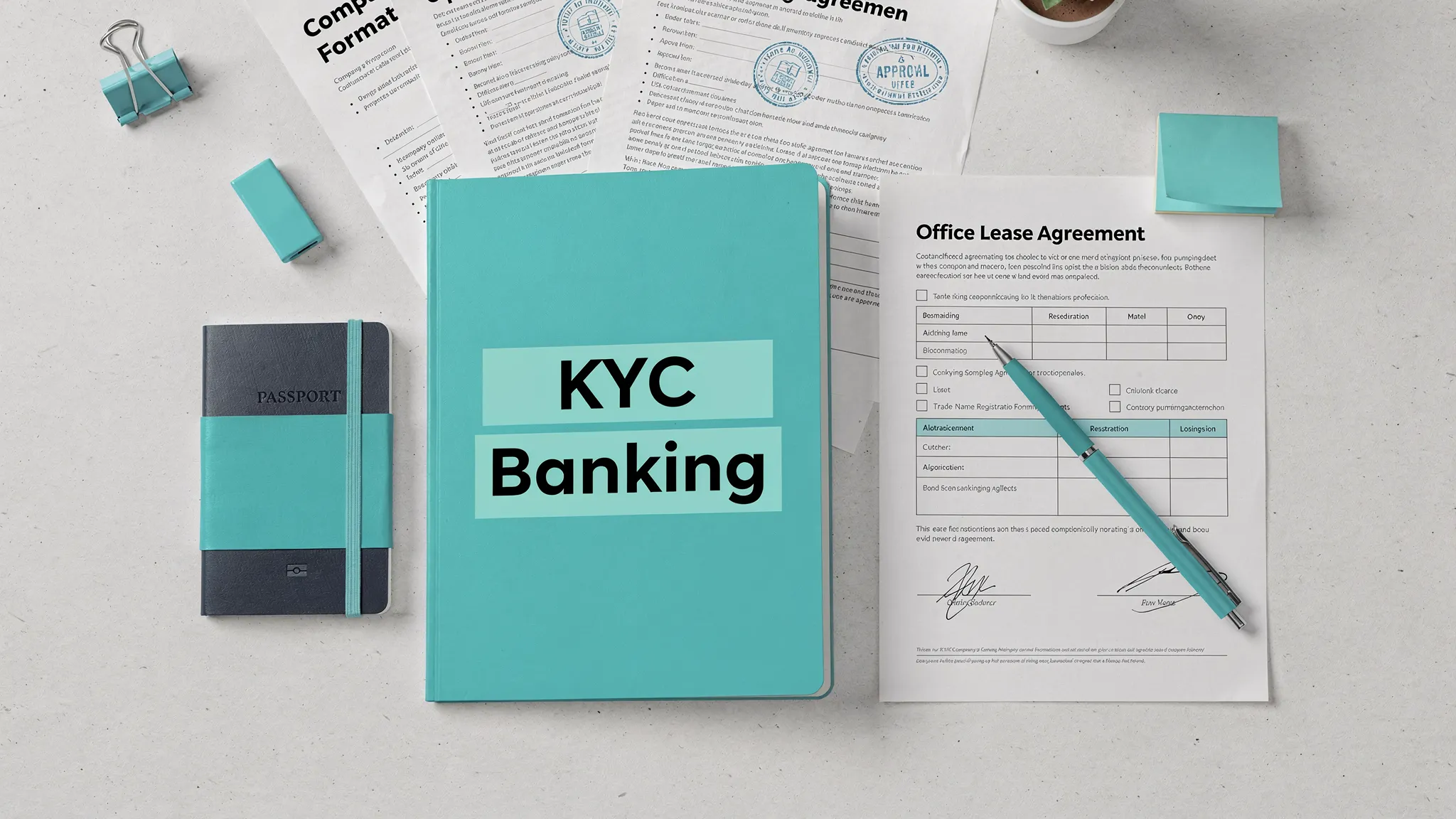
Expect to prepare a compliance pack that can include:
- Passport copies and ID details for shareholders and managers
- Proof of address and, in some cases, a bank reference or CV
- Corporate documents if a shareholder is a company (certificate of incorporation, register extracts, resolutions)
- UBO information and declarations
Banks will often ask for overlapping documents later, so it helps to prepare a “bank-ready” file from day one.
Office address or facility arrangement
Depending on the jurisdiction and activity, you may need an office lease, a flexi-desk, or an approved facility arrangement. This is not just a formality, it can affect:
- Visa eligibility and visa quota
- Bank comfort with “substance” (especially for higher-risk activities)
- Operational reality (meeting clients, hiring, inspections)
License issuance and company registration
Once documents and premises requirements are met, the authority issues your trade license and registration documents.
Keep digital and certified copies organized, because you will use them repeatedly for banking, tax, immigration, and vendor onboarding.
Establishment card and visas (if needed)
If you plan to live in the UAE or hire staff, you will typically proceed with immigration file setup and visa processing. The order varies, but the principle is consistent: company setup enables immigration sponsorship, and immigration steps enable resident IDs and practical life admin (housing, utilities, etc.).
Bank account opening: plan for it like a project
For many founders, the hardest part is not incorporation, it is opening and maintaining a corporate bank account smoothly.
Banks in the UAE are rightly focused on compliance and risk. They commonly assess:
- Business model clarity (what you sell, to whom, and how you get paid)
- Source of funds and source of wealth (especially for new entities)
- Expected transaction profile (countries, volumes, counterparties)
- Substance indicators (real contracts, invoices, premises, team)
A practical way to reduce friction is to prepare a short “banking narrative” with supporting documents, such as signed client agreements, pipeline evidence, and a simple website.
Alldren offers bank account opening support as part of its UAE corporate services, which can help you present the right documentation in the format banks expect, without guesswork.
Tax and ongoing compliance: don’t leave it for later
Setting up is only phase one. Staying compliant is what protects your license, banking continuity, and long-term scalability.
Corporate tax and VAT basics (high level)
- Corporate Tax: The UAE has a federal corporate tax regime. Rules can differ by entity type, income profile, and free zone status, so confirm your position early using guidance from the Federal Tax Authority.
- VAT: If you cross registration thresholds or operate in certain ways, VAT registration may apply. The FTA’s VAT guidance is the best primary reference.
Because tax treatment depends on facts (activities, customers, place of supply, free zone conditions, and more), avoid relying on social media summaries.
Corporate governance and bookkeeping
Even lean companies should set up a compliance rhythm:
- Track license renewal dates and any required filings
- Maintain accurate bookkeeping from month one
- Document shareholder and director resolutions properly
- Keep UBO and KYC records current for banks and counterparties
If you want one theme to remember, it is this: your “compliance file” is a living asset, not a one-time submission.
Common mistakes that slow down UAE company setup
Most problems are preventable with better sequencing.
- Choosing a jurisdiction based on price alone instead of operating scope and banking reality
- Picking an activity that does not match real operations, then struggling with contracts, invoicing, or approvals
- Assuming banking will be easy without preparing source-of-funds evidence and transaction expectations
- Underestimating visa and premises constraints (especially if you need multiple visas)
- Leaving tax and bookkeeping until the end of the year, which increases risk and cost
A realistic timeline (what to expect)
Many UAE setups can be completed quickly when the activity is straightforward and documents are ready, but timelines vary widely based on:
- Whether external approvals are required
- How fast you can secure premises (if needed)
- Shareholder complexity (individual vs corporate shareholders, attestations)
- Banking readiness and compliance checks
Treat “incorporation” and “fully operational with banking and visas” as two different milestones.
When it’s worth getting expert help
If your setup involves any of the following, you will usually benefit from senior, hands-on structuring support rather than a generic package:
- A regulated or semi-regulated activity
- A group structure (holding company plus operating company)
- Corporate shareholders or multi-jurisdiction ownership
- A need for strong banking outcomes (higher volumes, international counterparties)
- Family or private client considerations (nominee arrangements, governance, privacy within legal boundaries)
Alldren positions itself as an expert-led, transparent partner for establishing and managing UAE companies, with services spanning company setup and structuring, ongoing compliance, corporate governance, bookkeeping and tax registration support, visa processing, nominee director services, and bank account opening support. If you want to reduce rework and build a structure that stays robust after incorporation, you can start with an advisory-led setup plan at Alldren.
Quick checklist: documents you will likely need
This varies by authority and case, but the following list covers common requirements.
| Category | Common items | Why it matters |
|---|---|---|
| Identity | Passport copy, entry stamp (if applicable), photo | Standard KYC and immigration steps |
| Address and background | Proof of address, CV or profile | Helps authorities and banks understand the profile |
| Shareholding | Shareholder details, UBO details, ownership chart (for groups) | Required for compliance and banking |
| Corporate shareholders (if any) | Incorporation documents, resolutions, registers, attestations as required | Often the biggest driver of timeline |
| Business proof | Website, pitch deck, contracts or invoices (if available) | Strongly supports bank account opening |
Frequently Asked Questions
How much does it cost to setup a company in the UAE? Costs depend on jurisdiction (mainland vs free zone), activity, visa needs, office requirements, and whether external approvals apply. It is best to request an itemized quote that separates government fees from service fees.
Is a free zone company enough if I want UAE customers? Sometimes, but often you will need a compliant route to serve the local market (for example, specific arrangements or additional registrations). If UAE customers are core to your business, confirm market access rules before choosing a free zone.
Can I get UAE residency by opening a company? Many company setups can sponsor residency visas, but eligibility depends on jurisdiction, license type, and visa quota rules. Incorporation alone is not the final step, you typically need to complete immigration processing as well.
Do I need a physical office to register a UAE company? Requirements vary. Some free zones offer flexi-desk options, while certain activities or mainland setups may require a lease. Office choices can also affect visas and banking comfort.
How long does UAE company setup take? Straightforward cases can move quickly, but regulated activities, corporate shareholders, attestations, premises constraints, and banking can extend timelines. Plan for incorporation first, then banking and visas.
What is the biggest reason UAE bank accounts get delayed? Missing or inconsistent information about the business model, source of funds, expected transactions, and counterparties is a common cause. Preparing a bank-ready compliance file early helps.
Do I need to register for VAT or corporate tax right away? Not always immediately, but you should assess your position early and keep proper books from day one. For official guidance, refer to the UAE Federal Tax Authority.
Start with a setup plan that stays compliant after launch
If you want to setup a company in the UAE without rework, the fastest path is usually a short structuring phase first, then an execution plan that covers incorporation, banking readiness, visas, and ongoing compliance.
Explore Alldren’s UAE company services at alldren.com to discuss the right jurisdiction and structure for your activity, and to get a transparent, upfront view of next steps.


